Sunday, February 27, 2011

Hemingway's iceberg - minimalistic

I mentioned Ernest Hemingway's style in a comment on my post "Personify," but the subject should be blogged. Towards the end of the post I will explain the narration of my comic strip "The Affair."


Hemingway called his minimalistic style the iceberg theory, where only 10% of the information is given.  In a story, he eliminated all that the reader can assume, leaving what the reader could not assume.  Just the essentials, or the minimum, needed to understand the story.  


David Malki, creator of Wondermark.com, has a visual example of this style improving content. The Garfield strip below is redundant through the visual and text. 
Malki states, "the punchline is set up twice and delivered twice." 
Here is Hemingway's theory of just the essentials applied to the strip:


Malki on the strip above: "It allows the reader to connect the dots, and engages them in the narrative.  It leaves room for interpretation, and for Garfield’s true thoughts to only sound in the theater of the reader’s mind."


Without the speech bubble in the first panel, the reader can interpret that Garfield's throwing the ball for fun. As soon as the Odie, the dog, is spotted, the game of catch is determined.  So redundancy killed the humor because all the interpreting work, in a reader's role, is done already, leaving  the reader no reason to linger on the story.  


For more on Garfield, look up Eric Burns who Malki referred to as the one who noted Garfield's redundancy.  Malki has more posts on newspaper comic strips in Comic Strip Doctor


In my comic strip project, "The Affair," I intended to state what the reader is less likely to determine on his/her own.  Click the image for a full view.
I never describe the affair mentioned in the title because the reader can interpret the Jack's  interest in the Queen from his shortened distance. If I state that the Jack moved closer to the Queen, then text would be redundant.  Instead I narrate the actions and feelings of the other characters which cannot be easily determined from the visual. The minor characters get their story in the captions because the main story is visible enough.


The next time a story seems to be about nothing check if you, the reader, have interpreting work to do.  


For writing, this minimalistic style is more difficult because the information is all text.  The easier cases are dialogue and description.  Do the character's repeat too much of what the narrator states?  Inner dialogue, thoughts, typically do not need to be repeated in conversation.  Having someone read your story can help to determine what can be assumed and what cannot.


Can you think of an example of this minimalistic style or a story that could use it?

Tuesday, February 15, 2011

Personify

I once tested out the filters on my camera phone in my backyard and came up with this movie trailer spoof:
I was just messing around until I saw how the first photo shown looked like a drama to me. So I messed around more to create a story.  It was fun and received laughs from family and friends.  I had also personified the animals by making them human-like in a relationship drama context.

I still like how a story can be created with anything.

In my Visual Cultures class, I found examples of personification through Edward Gorey's."The Animated Tragedy" (a page is shown below) and "Bug Book."

For my final in that class, I decided to make a comic on personified objects. Because I like the look of poker cards, I chose them as my objects. So I made a drama about cards moving closer and away from each other as a hand of cards.

I aimed to keep the captions casual and like a children's book as I saw Edward Gorey did for even his dark stories. I never mentioned the affair after the title.

For the final, I had printed out black and white.  Since then I photoshopped the images to make them more flat and give more dramatic lighting.  The piece will go in my school magazine. =)  Once again, I had fun. and I hope I do more personified works. What do you think?

If you're interested in Edward Gorey, then I recommend Amphigorey.

Monday, February 7, 2011

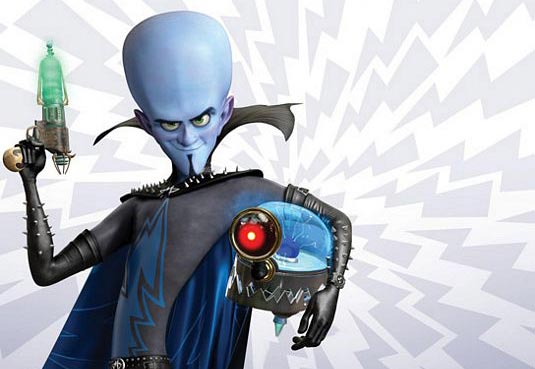
MegaMind - appearances

Just saw MegaMind at a $3 theater.  I did not expect much from the movie, but I found myself laughing and  surprised.  Also, it has a lot of character exploration for MegaMind.  Along with learning his life story, I think the audience cares for him because his character design is not all threatening.

From memory, I thought MegaMind had a sharp, pointy chin but he doesn't. Although the lower portion of his head is angular, his head is mostly round.  Sharp angles look threating while round is safer.  Yes, he does have the sharp studs, but they're tiny.  His collar too has points, but it rounded with the curves like his elbows. His body too creates a long curve.  The long, skinny body makes him odd-looking, which could be perceived as strange enough to be feared.  However, he says odd, funny things so the odd look is considered funny as well.

Aku from Samurai Jack has pointed ends, edges, and angles that make him look like a real threat. Look at just his teeth.  The way they curve out is strange, which this time does evoke fear. Aku can be funny sometimes but he is still recognized as a threat.

Look at these two:

MegaMind looks threatening only by the larger studs.   The collar is taller now but has lost its points. Titan/Tighten on the left looks more menacing just by his expression.  His face is round too but more angular than Mega Mind's face. Perhaps the Tighten's fiery colors add to the threat. He looks like dangerous fire.  MegaMind could look threatening with the blue and black by evoking a cold and dead personality but he shows emotions that gain sympathy. The red/pink/purple on his ears, nose, and cheeks too make him look less dead. The color reminds us that he's a living being with blood running through him.

Overall, MegaMind looks like a villain but he doesn't sell it like Aku and Tighten.

Although I'm talking about a movie, these visual factors can apply to a prose description of a character too.  A villain with a sharp chin rather than a round or large chin sounds more threatening. Colors can also portray the character's personality and nature but because the reader has to visualize the image, just a few colors should be used at a time.  An author points out the features to look at by stating them.

It's up to you writers and artists if you follow or break down the first impression of characters, but a first impression should be given for the audience to react to the character's arrival.

Saturday, January 29, 2011

Relearning to Express

I'm taking an art class again after a year and a friend new to art classes is joining me.  I imagined her fresh perspective to art lessons and either realized or remembered this: We learn to see again through art. For example, we need to notice and understand colors, shapes, light, shadow, and depth again in order to capture these aspects.

So with any kind of writing we learn to talk again.

began reading The Unwritten

In my post "Meta," I mentioned an interest in the comic book/graphic novel series called The Unwritten by Mike Carey. I've read vol 1 and am still interested.  There was a lot to like.


The introduction is by Bill Willingham, who wrote the comic series Fables. He talks about comics since the golden age of superheroes.  Then he describes a new type of comic, literary comics. I like comics like Hush and Superman/Batman with my favorite superhero, Batman, but I felt like Willingham addressed craving for literary. So I'm happy to hear about this new wave of comics. The introduction was a good note to start with.


The comic itself parodies Harry Potter and even states the similarity in a comic con scene. haha. There are depictions of fans from causal fan to online debater to the obsessed and delusional. Along with the commentary on fans, the main character stumbles upon a horror writers workshop where each contemporary type critiques the other. I laughed at and admired this setup.  There are also allusions to existing writers and a side story depicting Rudyard Kipling's career as a writer. This comic is packed with literary and commentary.


The main element is the boundary between fantasy and reality. The comic is certainly meta (metanarrative and metafiction I think).  There is a note stating that the author, Carey, had wanted to use prose format somehow with a book actually inside of another book to understand the boundary being crossed.


All these aspects I enjoyed in vol 1.  Before I reached the Kipling side story at the end, I had satisfied my crave for literary.  My taste buds for had a taste of many flavors. So by the time I finished the book, I felt I had just been through a workshop or had enrolled in a genre/author class.  I had gained more than I had craved. And this satisfaction was just from vol 1.


I recommend The Unwritten and hope you get a kick out it too.

Wednesday, January 26, 2011

How to Train Your Dragon

How to Train Your Dragon was a great movie for many reasons like the character interaction.  However, I'm just going to look at the narrator's voice because the story is told through him, Hiccup.
Hiccup is both the main character and the narrator. He is the one who introduces us to the movie's setting and society. Also from his introduction, we sense his tone of indifference and the movie's humor. In the following clip, we get more of both:
My favorite line in that clip is the last one about keeping in all that Viking. Gesturing at Hiccup's body as the problem highlights his lack of strength. However, Hiccup's body is not the only reason he cannot convince others--and us the audience--of his Viking fury. His tone does not sound confident of or even excited in what he states. He is indifferent to this lifestyle and not even his own words can convince himself to follow it. We are shown this factor right off the bat to understand the story's direction.

Something else to notice about Hiccup's voice is that it's matured. Hiccup is a goofy adolescent who has a crush on a girl. However, his voice is not a boy's or changing from puberty. The voice actor is an adult not a boy. Thus, Hiccup carries seriousness along with the humor of being an adolescent. His voice has matured and he is trying to be mature himself. One of the story's themes is coming of age then; He is finding himself and his place in society.  

Hiccup's voice is heard before we see the society and dragons so I thought it was worth looking at.

Monday, December 27, 2010

Meta

I've heard little about meta-narrative and meta-fiction before, but I did not understand the concepts. Then I had a week of great literature talks with three other English majors this past Fall.  I kept running into them that week, which I'm grateful for.  Meta was one of the talks (not metaphysical poetry).  

At this point, I had seen an episode of Community where the character Abed makes a meta-film. He states how he'll make a film about a film-maker who realizes his life is a film, whose film-maker will realize his life is a film too, and so on and so on. So I understood that a meta-art form worked beyond its boundaries or was layered with one form inside of another form. A film within a film. However, metanarrative is specifically a story within a story.  Metanarrative seems to also have a philosophical approach towards truth. Sounds like the inner story is the material analyzed in the outer story, which the reader himself can analyze too. I'm still trying to understand metanarrative. I know that the novel City of Glass is a example of metanarrative. I read the comicbook/graphic novel version in a class, but I have to read the story a second time.

My friends' description of meta sounded like when the story "breaks down the fourth wall," goes beyond its boundaries, and speaks directly to the reader about its form.  Soo I now see a meta-art form as being conscious of itself and commenting on the form.  Going with Community again, the character Abed makes the show meta. He comments on what the episode is parodying.  He even once stated how his commentary is his gimmick as a character.  This aspect of the show is one reason why I watch Community.  My friends helped name and define one of my interests.

This week I got my sister to watch one of my childhood movies, The Neverending Story, which I had a feeling was Meta.  (SPOILER ALERT)  The movie has a metanarrative because it's a story within a story, following a boy reading a book of the same title.  The experience explored is the connection between the reader and protagonist.  A reader follows the protagonist's journey, feeling and suffering with him.  That's why Atreyu saw Bastion in the mirror.  Also think about this: Atreyu's journey depended on Bastion's determination to continue reading the story.  Bastion is the one continuing and pushing the story.  

You can compare this movie to The Princess Bride with the boy's interest in continuing the story, but the only influence he had was whether the audience of the movie would see more the story.  The characters do comment a little on the inner story though like with the expectation of a hero vanquishing the villain.  I would like to have a metanarrative with the protagonist knowing that he lets the reader see the inner story.

Back to The Neverending Story with my sister and I as the audience,  I kept mentioning a wolf scene so when the part came, she seemed disappointed that it was mostly talk.  I'm glad she continued to watch the movie though.  It is mostly talk and shots of Bastion reading, but I like the metanarrative.  I also love the Swamp of Sadness. If you let sadness overtake you, then you will sink. So basically you give up in this journey that needs determined heroes/readers to continue the story. I read somewhere that there was a book before the movie and I found out that the movie only covers half the story.  I'm adding the book to my list to see more of the metanarrative commentary. The second half of the book seems to be the movie sequel but the book ends differently.

Another book on my list is a comic/graphic novel called Unwritten. I've only read a few pages so far but I like what I've read that the story's about.  It covers fanatic fandom for a series that's like Harry Potter. I am interested in fandom.  How a story impacts a fan greatly, the arguments among fans of different stories, and the harm of escapism when not accepting reality. Unwritten also seems to be meta with the boundaries of story and reality, but I think the commentary is more on the fans.  The series is three volumes, with the third one coming out in March.

Maybe I'll have another entry about Meta or at least about Unwritten when I've read more of it.